
Traveling across time zones can throw your body’s internal clock into chaos, causing the exhausting nightmare we all know as jet lag. But what if you could land feeling refreshed, ready to take on your destination without the usual fogginess? In 2025, science has cracked the code on strategic nightly routines tailored specifically for travelers who want to beat jet lag for good.
This breakthrough hinges on understanding your body’s master clock nestled deep in the brain, the suprachiasmatic nucleus (SCN), and how it synchronizes countless physiological processes. By combining precise melatonin timing with targeted light exposure and meal schedules, travelers can slash their recovery time by up to half. The key? Personalizing your approach according to your travel direction, sleep preferences, and even your age.
Here’s the lowdown: strategically timed low-dose melatonin combined with morning light for eastward flights and evening light for westward ones can speed up your body’s clock reset by days. Apps like JetSetEase and TravelRest are taking this science mainstream, crafting personalized plans that leave generic tips in the dust. Meanwhile, professional athletes and business travelers are leading the charge, using these routines to safeguard performance and mental sharpness across the globe.
How Strategic Nightly Routines Help Reset Your Body Clock Fast After Traveling
Imagine your body clock as a finely tuned orchestra, each organ and tissue playing in harmony under the baton of the SCN—a tiny cluster of neurons that responds directly to light cues. When you jump multiple time zones, your internal schedule falls out of sync: your brain thinks it’s the middle of the night while your stomach demands lunch. This mismatch is the root of jet lag symptoms like fatigue and impaired cognition.
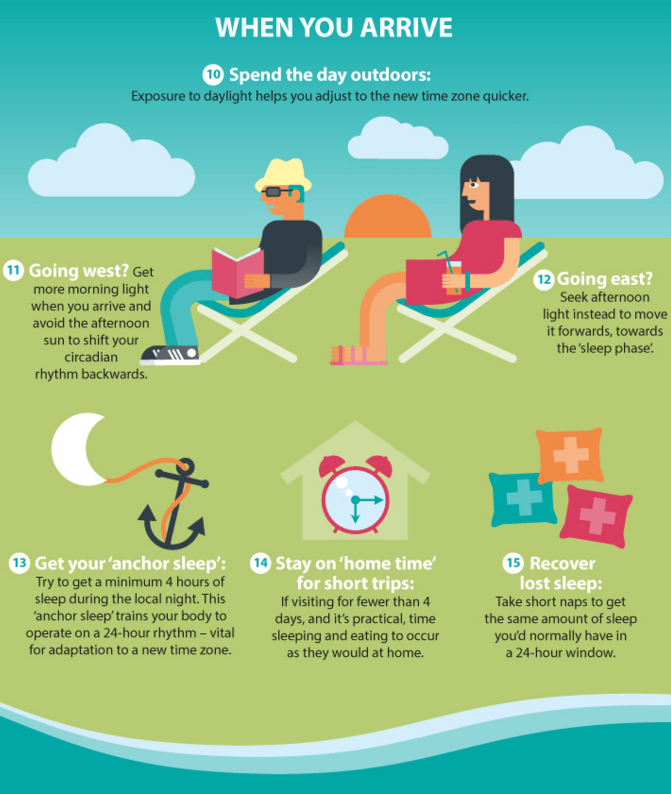
Experts now know that just blindly trying to sleep at your new local bedtime or relying on random tips doesn’t cut it. Instead, targeted nightly routines involving melatonin supplements (ideally 1-3 mg taken 1-3 hours before your intended bedtime) combined with the right light exposure can recalibrate your internal clock quickly and safely. For instance, if you’re jetting eastward, catching bright morning light upon arrival can advance your circadian phase, making sleep come easier at night.
And it turns out timing is everything. The wrong dose of melatonin or misaligned light exposure can backfire drastically, making adjustment take longer or worsening symptoms. This precision approach also includes tweaking meal times to align with your destination, further syncing your body’s peripheral clocks.
Melatonin and Light: The Power Duo for Jet Lag Recovery
Melatonin is basically your body’s natural “nighttime” hormone, signaling when it’s time to wind down. But for travelers, taking melatonin isn’t about knocking out quickly—it’s about resetting your internal clock with precision. Studies show that doses between 1-3 mg given before your target bedtime can cut recovery time by up to 50%. In contrast, bigger doses or wrong timing can confuse your clock rather than help it.
Light exposure works like a time-reset button too. Depending on your travel direction, it can either advance or delay your body clock. Early morning light can help those traveling east shift their schedule earlier, while bright light in the evening helps westward travelers delay their sleep timing. Tools like NightGlide or SleepNomad leverage this science, offering timed light therapy to complement melatonin intake.
Combining these two strategies with well-planned meal times—having a light dinner before you travel and a hearty breakfast after arrival to synchronize metabolism—can reduce jet lag’s metabolic surprises, helping travelers feel more in sync faster.
Travelers and Business Pros: Customizing Nightly Routines for Peak Performance
Not all travelers are the same. Business pros hopping from meeting to meeting and elite athletes jetting across continents need bespoke strategies that respect their performance demands. Research indicates that people with more travel experience and awareness of circadian strategies sleep better and adjust faster.
For example, Japanese junior athletes traveling internationally showed improved ease of falling asleep and better sleep quality when they understood and applied strategic light and melatonin use. Similarly, business travelers who use apps like LunaVoyage and RestfulMiles to tailor their schedules avoid cognitive slowdowns and mood swings, safeguarding their professional edge.
In fact, 96.4% of users following evidence-based protocols via apps such as JetLagJunction report minimal to no severe jet lag symptoms versus traditional advice. This shift highlights how data-driven, customized nightly routines are becoming essential travel tools, especially as global business travel spending soars toward a staggering $1.8 trillion.
Meal Timing and Sleep Scheduling: Small Tweaks, Big Impact
Meal timing might not get as much flak as light or melatonin, but it’s a surprising heavyweight in circadian optimization. Studies suggest syncing your meals with the local time zone upon arrival can speed adaptation by a third or more. This means opting for a light dinner before your trip, skipping meals during overnight flights, and eating a substantial breakfast when you land.
Additionally, gradual adjustments to your bedtime by 15-30 minutes before traveling can gently nudge your circadian rhythm closer toward your destination time, reducing stress on your system. Apps like DreamTransit and TravelerTranquil offer tailored schedules integrating these steps, smoothing your transition and enhancing overall rest.
For a deep dive into crafting your own nightly routine geared for smooth travel transitions, check out these expert-backed guides on how to reset your body clock at night and customizing sleep routines to maximize recovery and comfort on the road.
Why Following Generic Travel Tips About Jet Lag Just Doesn’t Cut It
We’ve all heard the old advice: “just stay awake till local bedtime” or “avoid napping.” However, these blanket tips ignore the complex dance of light, melatonin, and personal circadian rhythms. Dr. Steven Lockley of Harvard notes that such advice only works about half of the time—sometimes even making jet lag worse.
The crux is that your body’s response to light varies depending on internal timing. If you get exposure at the wrong time, your clock shifts in the opposite direction, extending jet lag symptoms. Without understanding your chronotype (aka whether you’re a morning lark or night owl), you risk sabotaging your recovery.
The difference now? Precision protocols designed with data and apps like JetSetEase, TravelRest, and MidnightMiles, which account for your unique biology and travel itinerary. This is how travelers worldwide are finally beating jet lag instead of just surviving it.
Explore more on circadian rhythms and their role in quality sleep to boost your biological resilience during travel on Sleep Reboot’s expert resource.