
RM Calculator Guide
Unlock the secrets of your true strength potential with our in-depth RM calculator guide. Whether you’re just starting out or leveling up as a seasoned lifter, knowing your one rep max (1RM) is a game changer when it comes to strength training and workout planning. This complete walkthrough dives into how to accurately estimate your max lifts, why this knowledge matters, and how you can smesh it all together to maximize your results safely and effectively. Forget shooting in the dark—use a trusted fitness calculator to optimize each set and push your performance tracking to new heights. Strap in as we explore key formulas, training percentages, and smart tips to tailor your exercise routine for explosive gains and injury-free progress.
In brief:
- Understand the definition and importance of your one rep max in strength metrics.
- Learn how to safely calculate your 1RM using proven formulas without pushing to failure in the gym.
- Discover how to harness your 1RM data for optimal workout design and targeted training intensities.
- Explore the advantages of integrating a precision RM calculator into your performance tracking.
- Get familiar with common lifts used to benchmark strength and how to adapt your routine around your 1RM.
What’s Your One Rep Max (1RM) and Why It Should Matter to You
Your one rep max is the heaviest weight you can lift for a single, clean repetition of an exercise—think of it as your personal strength meter. Whether you’re pushing through a bold squat, a solid bench press, or a powerful deadlift, your 1RM serves as a benchmark for your true capacity. This isn’t just about bragging rights; it’s a core metric that shapes how you build and tweak your workouts. By pinpointing this maximum, you get a handle on your current strength, plan smarter workload intensities, and track progress with tangible numbers instead of guesswork. For instance, if you nail a spot-on 80kg squat but stall at 85kg, then 80kg marks your realistic 1RM.
How Calculating 1RM Helps You Train Smarter and Safer
It’s tempting to just load the barbell and test yourself until failure, but that’s risky, especially if you’re still getting your groove in the gym. Instead, smart lifters estimate their 1RM using clever math formulas based on submaximal lifts—so no need to max out every session. Knowing your 1RM helps you dial in your training loads perfectly, keeping you in safe zones while still pushing hard enough for gains. Plus, it’s key to avoiding overtraining and injury, giving you a clear roadmap for steady, consistent improvement in strength and endurance. This tailored approach is a win-win, whether your focus is bodybuilding, powerlifting, or general fitness.
Mastering the 1RM Calculator: Formulas and Practical Application
Accurately estimating your 1RM without risking injury is all about using the right formula tailored to your reps and weights. The top contenders include:
Epley Formula: The most widely used, calculated as 1RM = Weight × (1 + Reps ÷ 30). So if you bench 100kg for 5 reps, your estimated 1RM is about 116.7kg.
Brzycki Formula: Great for lower reps, computed like 1RM = Weight × (36 ÷ (37 − Reps)). For example, lifting 80kg for 8 reps approximates a 1RM of 99.3kg.
Lombardi Formula: Often favored for higher reps, incorporates a power function 1RM = Weight × (Reps^0.10), catering to more advanced lifters.
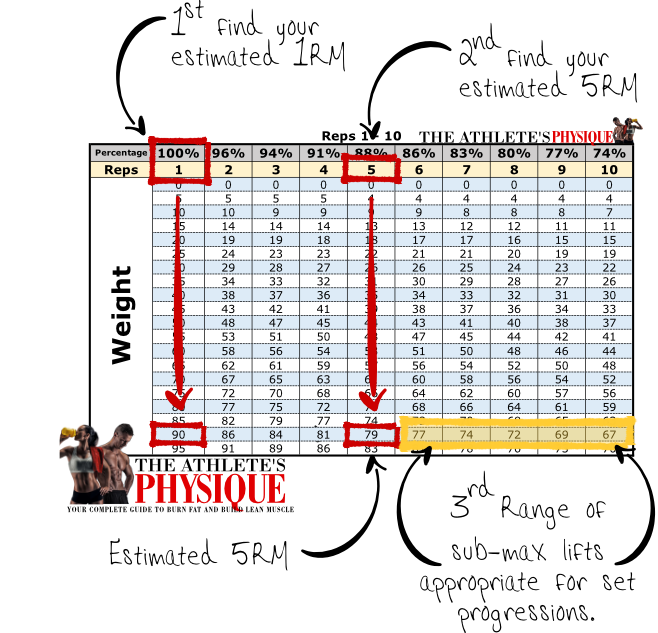
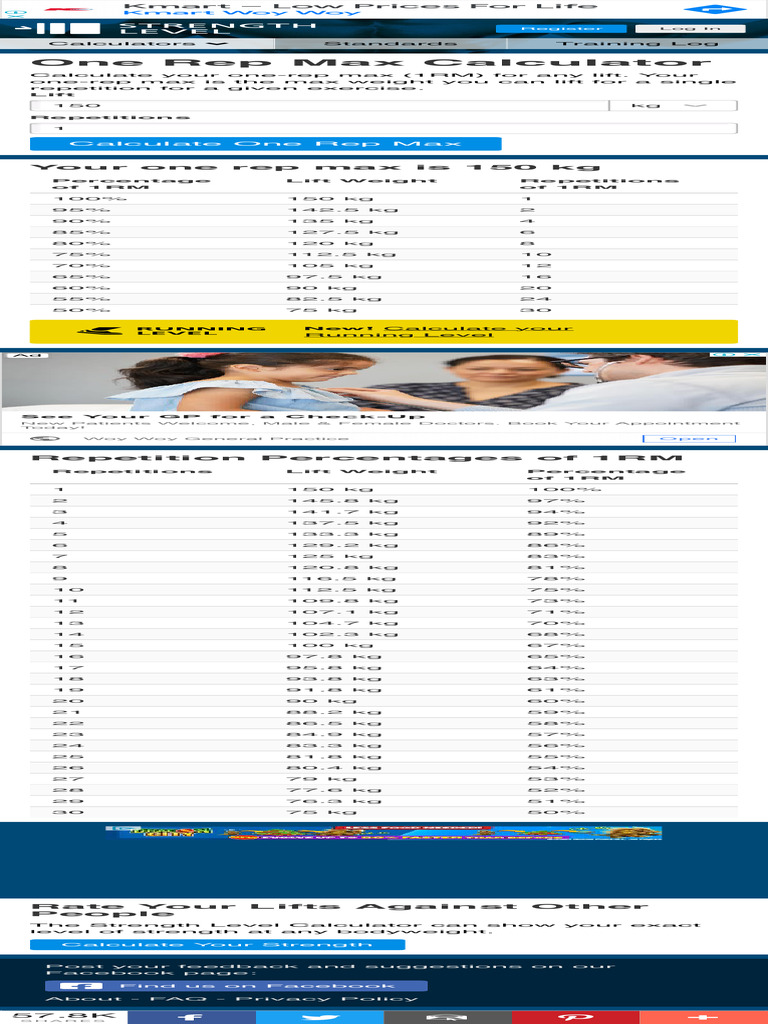
Didn’t feel like crunching numbers? No worries, leverage an online RM calculator—simply punch in your lifted weight and rep count to instantly get your 1RM plus suggested training weights for building strength, size, or endurance. This approach transforms raw data into actionable exercise optimization insights.
Setting Your Training Zones Using 1RM Percentages
Once you have your 1RM, it’s easy to craft workouts that hit your goals precisely:
Strength: Lift 85-100% of 1RM for 1 to 5 reps to build maximal power.
Muscle Growth (Hypertrophy): Working with 65-85% of 1RM in the 6-12 rep range effectively promotes muscle size.
Endurance: Use 50-65% of 1RM for 12-20 or more reps, sharpening muscular stamina.
This smart use of percentage-based workout planning prevents burnout while pushing your limits thoughtfully.
Common Lifts to Benchmark Your One Rep Max
Standard compound lifts serve as the foundation for accurately gauging your strength through 1RM calculations. These include:
Bench Press – Testing upper body pressing power.
Squat – Measuring lower body strength and stability.
Deadlift – Showcasing total body pulling power.
Overhead Press – Assessing shoulder and arm strength.
Barbell Row – Evaluating back and bicep strength.
Zeroing in on these multi-joint moves not only tracks total strength gains but also informs tailored programming. Remember, knowing your 1RM through these lifts helps tailor your performance tracking throughout your fitness journey.
Tips for Testing and Tracking Your 1RM Safely
Before you chase that max-out rep, prep is key. Warm up thoroughly, keep form tight, and never test while fatigued or injured. If you’re pushing heavy, having a spotter around is a must for safety. Document your efforts and revisit your progress every few weeks—this data-driven mindset helps you know when to up the weights and when to rest.
To dive deeper into workout supports, consider pairing your 1RM insights with specialized tools like the gym plate calculator for precise weight loading or the powerlifting calculator guide for structured strength program designs.